Free shipping on orders above $70
Cart (0)
Your cart is empty
July 29, 2026 · 8:00 am EST
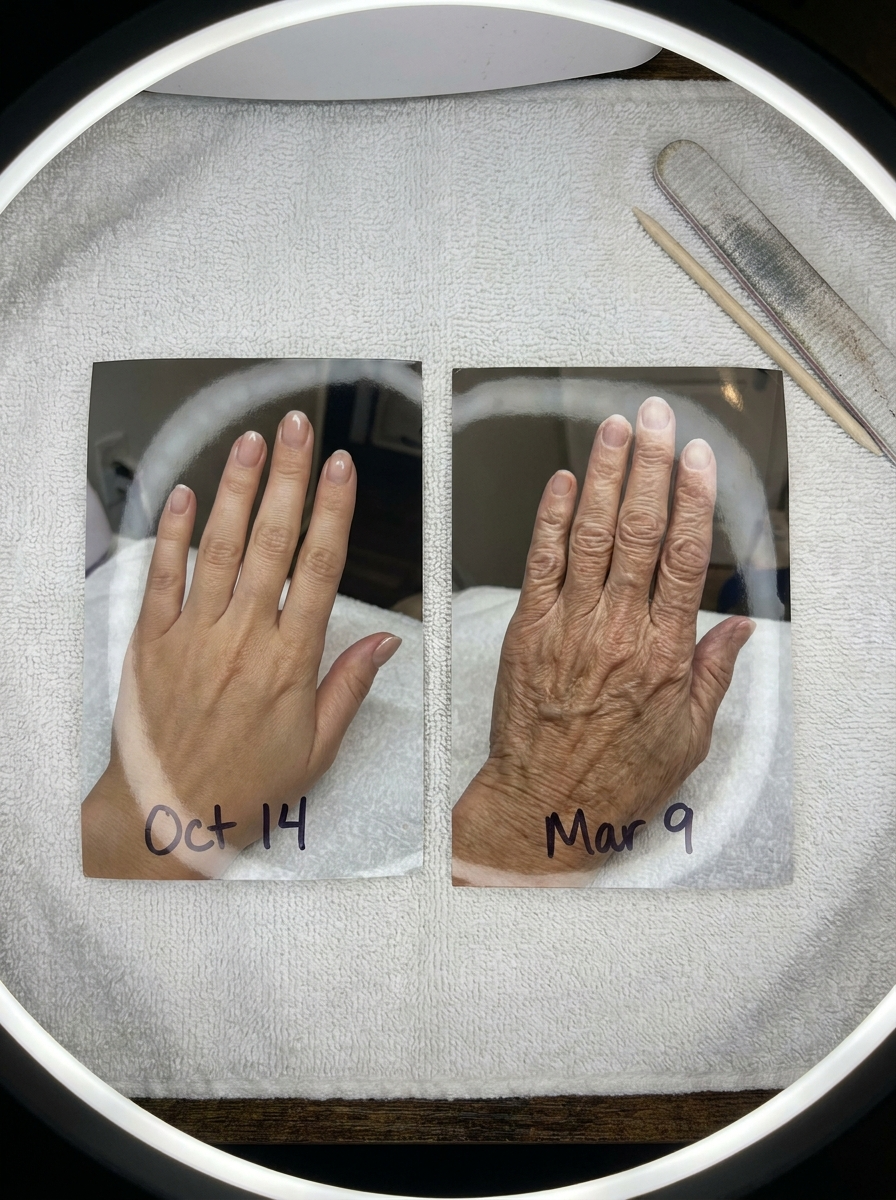
My face still gets guessed at 48. Last winter, my hands started photographing at 70. And because Marisol has done my nails every month for three years — and photographs her work, dated, for her portfolio — I can tell you exactly when it happened: between the second week of November and the first week of March. Five months. That's all it took.
If the backs of your hands went crepey in one season instead of one slow decade — if you can name the month it started — this is for you. If you've caught yourself hiding your hands under the dinner table, or deleting the photo of your own ring because of what was wearing it, keep reading. And if a doctor, a husband, or your own tired reflection has already told you it's "just aging" and there's nothing for it — I'm about to show you the seven things a woman in Paris showed me, in the order I wish I'd learned them.
Because here is the one sentence that changed everything: hands that change in months are not aging. They are collapsing — and a collapse, caught in time, can be rebuilt.
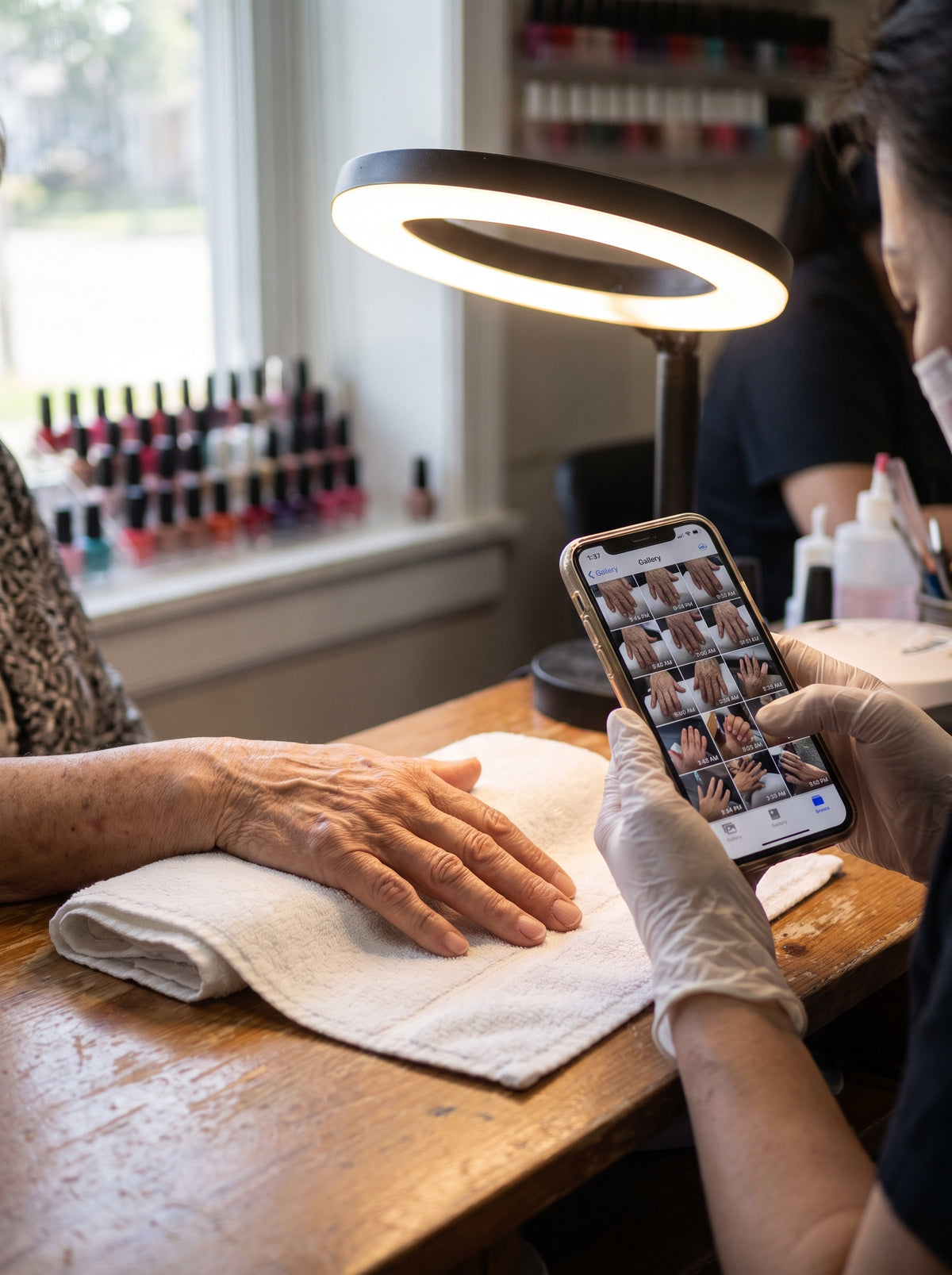
When I told my doctor my hands had changed "overnight," she smiled the way you smile at a child. Just aging, she said. Happens to everyone. But Marisol — who has held my hands, under a ring light, every single month for three years — didn't smile. She scrolled back through her photo gallery, put October next to March, and went quiet. "I would have seen this coming," she finally said. "I didn't. It arrived."
That was the first thing Anne confirmed for me later, over a video call from her kitchen table in Paris. Ordinary aging is slow — so slow you never catch it moving. What happened to my hands was different: years' worth of change compressed into a few months, set off by the hormonal shift, the way a season of frost can do what a decade of weather couldn't.
You weren't imagining it. You didn't "just finally notice." It happened fast — and knowing that changes everything about what you do next.
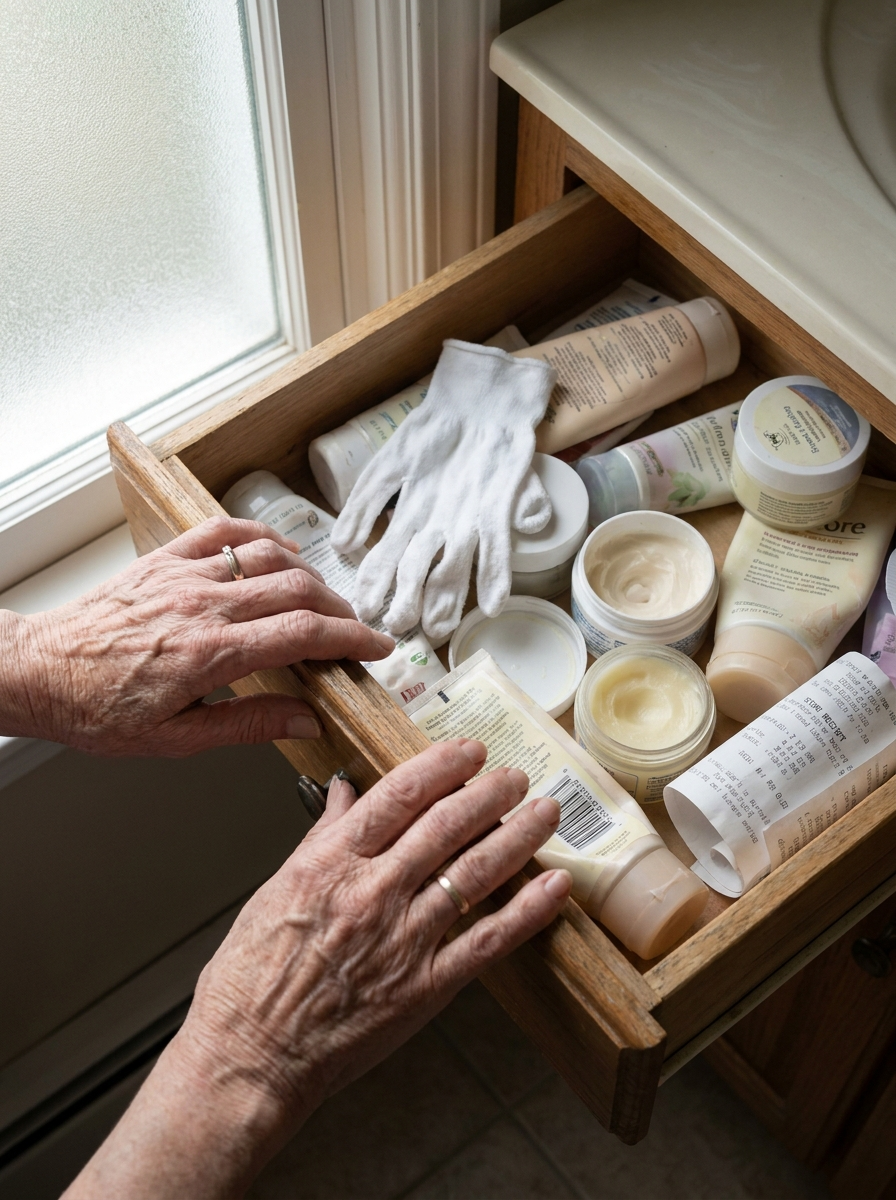
I want you to open the drawer where you keep them. Mine held four hand creams, one of them $78. Cotton gloves for sleeping in, over a thick balm — smooth until my first hand-wash at 7 a.m. A cuticle oil. The retinol from my face, which has kept my face young for a decade and left the backs of my hands red and stinging inside a week. A med-spa quote for hand filler: $1,200, repeated every year, forever.
Every one of those promised to fix my hands from the top. And the top was never the problem.
Anne said it kindly, and I'll say it kindly to you: you didn't fail the creams. The creams were never built for what happened to you. There has simply never been a real treatment made for the thin, hard-working skin of a hand — so hands were always handed leftovers from the face, and blamed when the leftovers didn't work.
Here is the sentence Anne gave me that no dermatologist ever had: "A cream can only sit on top of a hand you are going to wash eleven more times today. Your problem is underneath, where no cream reaches." That's why the gloves ironed my hands smooth until noon. That's why the retinol that saved my face burned this thinner skin and gave nothing back.
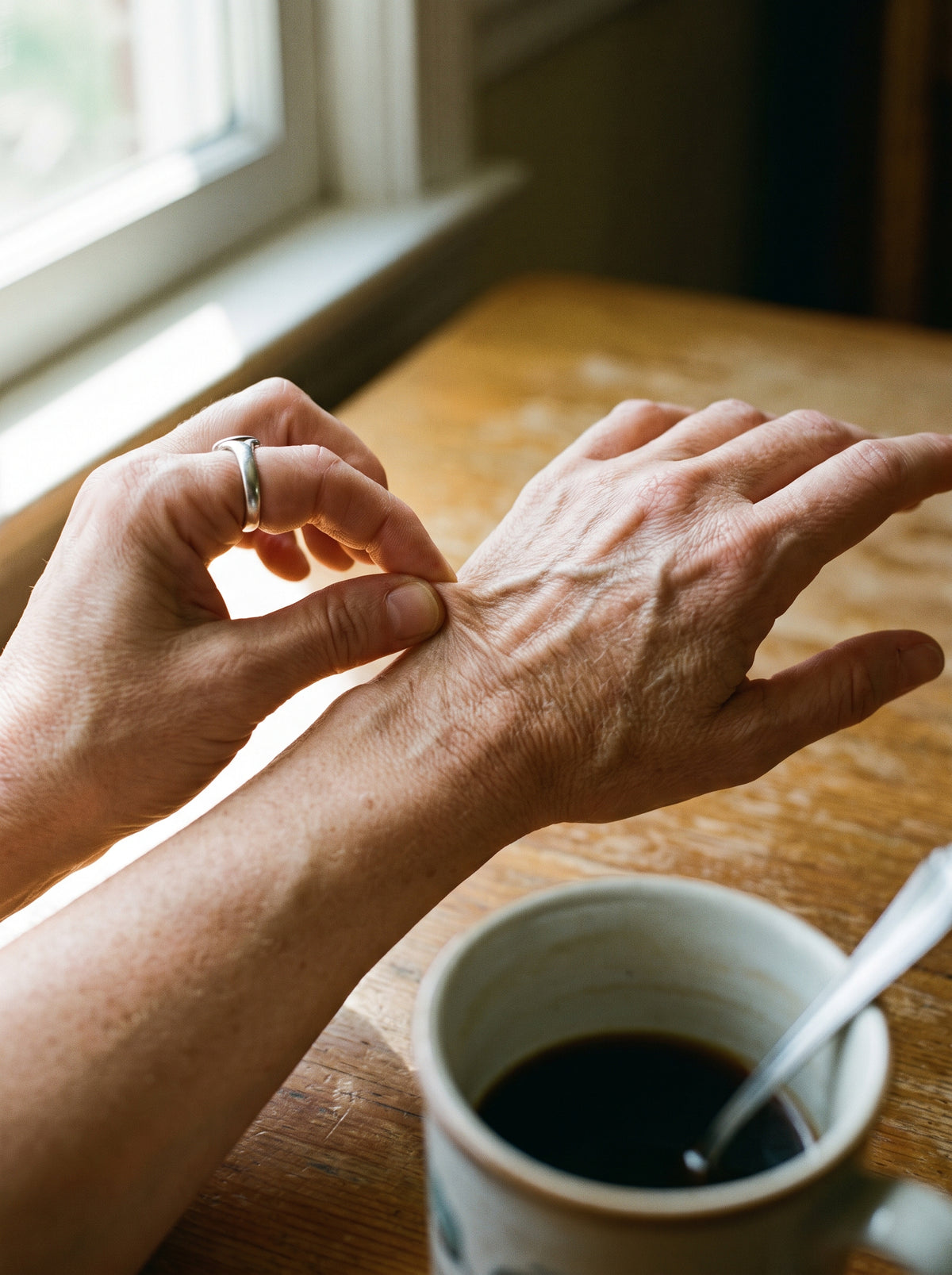
Then she showed me a test I could do myself. Pinch the skin on the back of your hand, let go, and count. Mine stood in a little tent and took a slow four seconds to settle. "That," she said, "is not the surface. That is what's underneath, gone quiet."
What she recommended instead was an oil — and I'd already crossed oils off my list, because the cheap one I'd tried once sat greasy on top all evening. I was wrong about why it failed. Most oils are the wrong oils, built to sit. This one was built for skin as thin as a hand: to sink in, wake it back up, put back what menopause strips out, and hold it there — through the washing, through the day.
Ten weeks later, I did her pinch test again and counted. Under two seconds. I did it four more times because I didn't trust myself the first time.
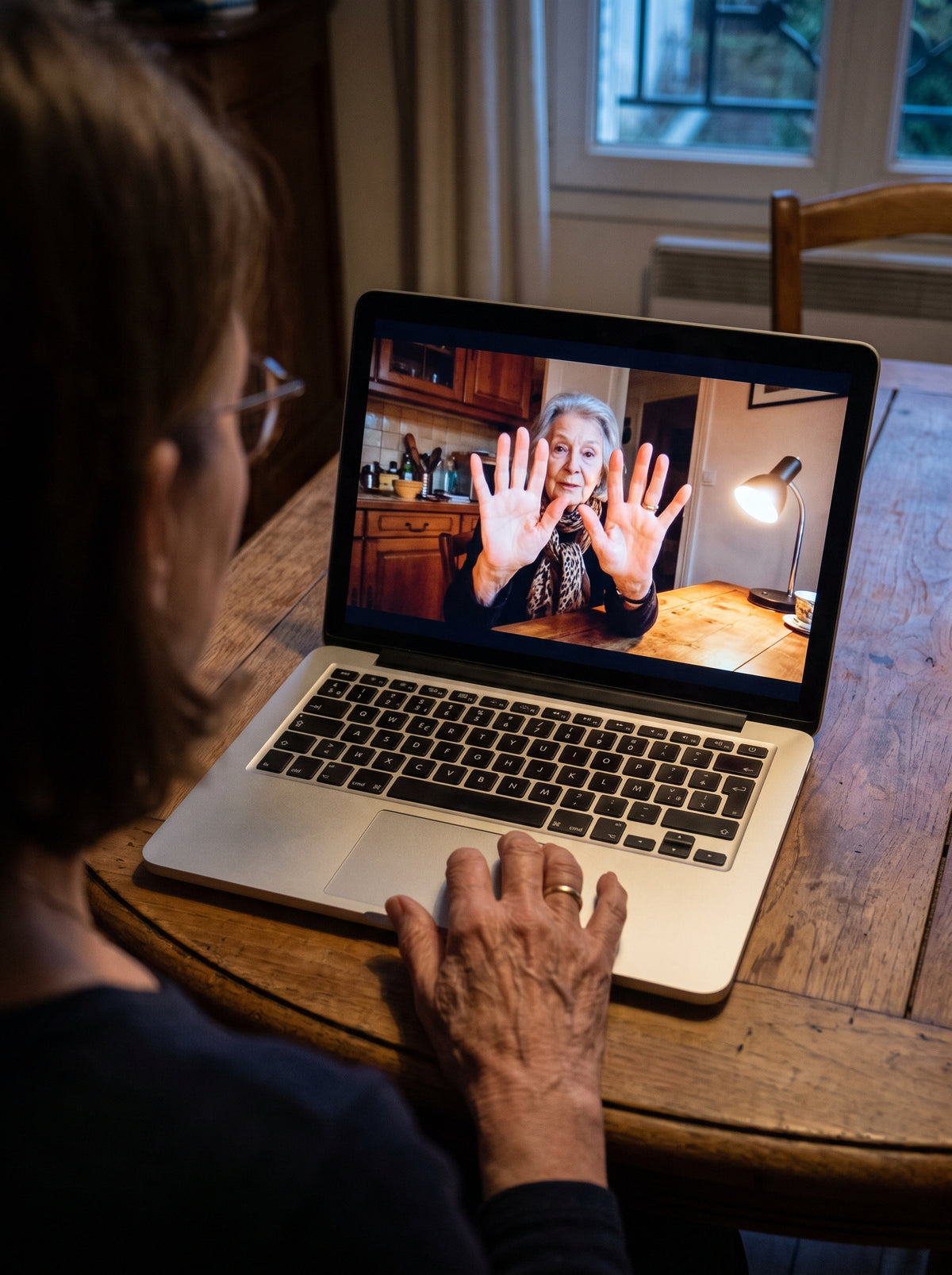
I didn't find Anne through an ad. The woman in the next chair at Marisol's — sixty-three, with the kind of hands I'd spent a year quietly envying — watched me tuck mine into my sleeves one afternoon and wrote a single name on the back of an appointment card. "See Anne," she said. "Tell her about the winter."
Anne is not an influencer. She has spent nearly forty years on one thing and nothing else: the skin that changes when a woman's hormones drop. Dermatologists in Paris quietly send her their own patients — the ones they've run out of answers for. She takes her consultations herself, over video, from her kitchen table, and she doesn't take everyone.
Before she said a single word to me, she held her own bare hands up to the camera. She is in her seventies. They were smooth and full — not tight, not done, just dense, like the skin still had something underneath holding it up. Then she set one small bottle in front of the lens: Eraé Paris. Bakuchiol. Camellia. Sea buckthorn. Evening primrose. Four plants, nothing pretending to be more. "It's the only one I recommend," she said, "and I don't sell it. I make nothing from telling you."
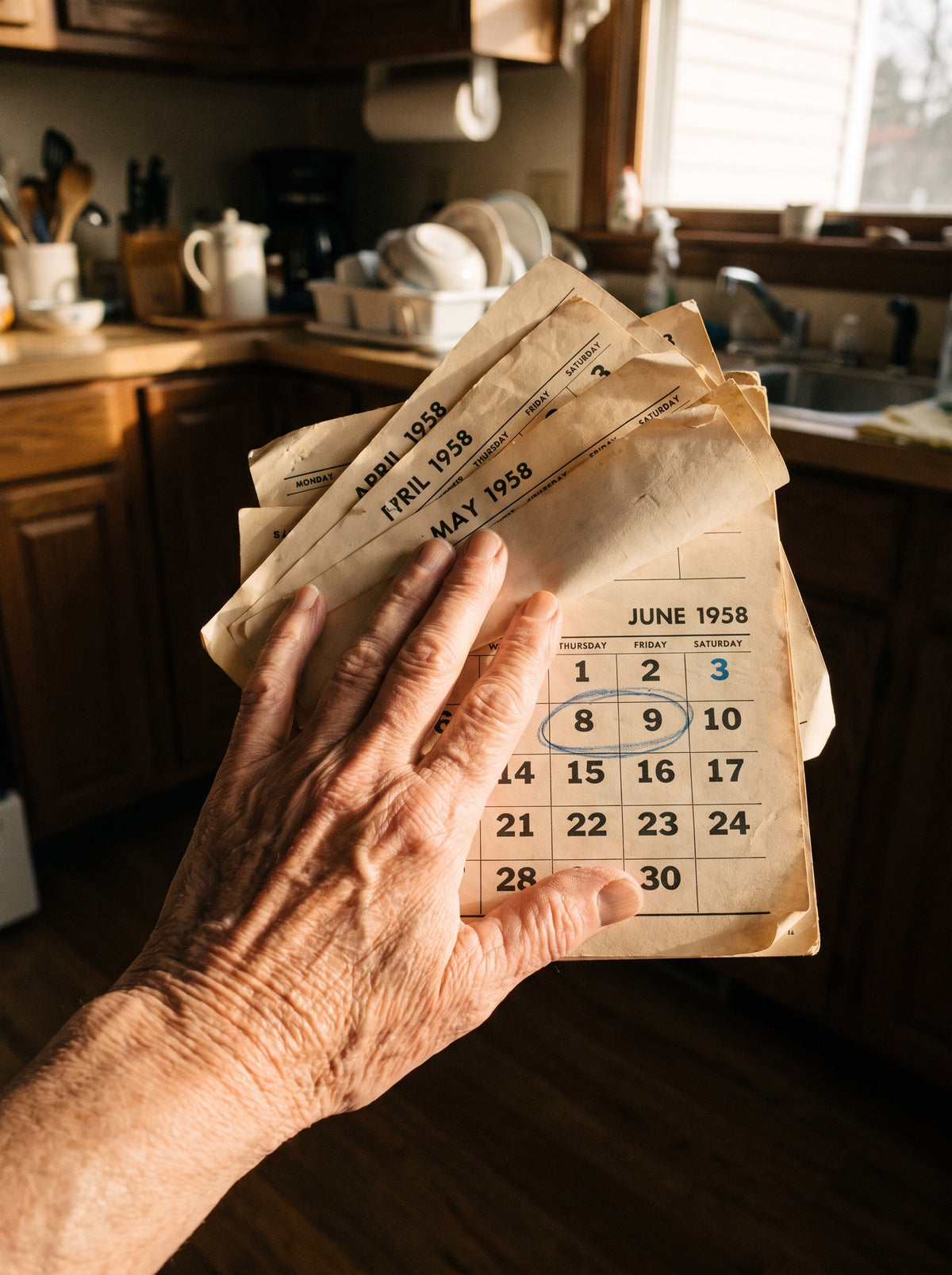
This is the piece that made me angry — because no one had told me, and I'd spent seven months believing the damage was decades old and finished. It isn't. The slow kind of aging, the kind that took thirty years, is stubborn. The sudden kind — the one-winter kind — is different. What collapsed quickly has not died. It has gone dormant. For a while, it can still be woken.
For a while. Anne was blunt with me about this, because she is blunt about everything: the women who start in time do well. The women who find her two years too late break her heart, because by then what was dormant has hardened into permanent. The window is measured in months, not in someday.
I started in month seven. Every morning I look at my hands, I'm grateful I didn't let it become month twenty-five.
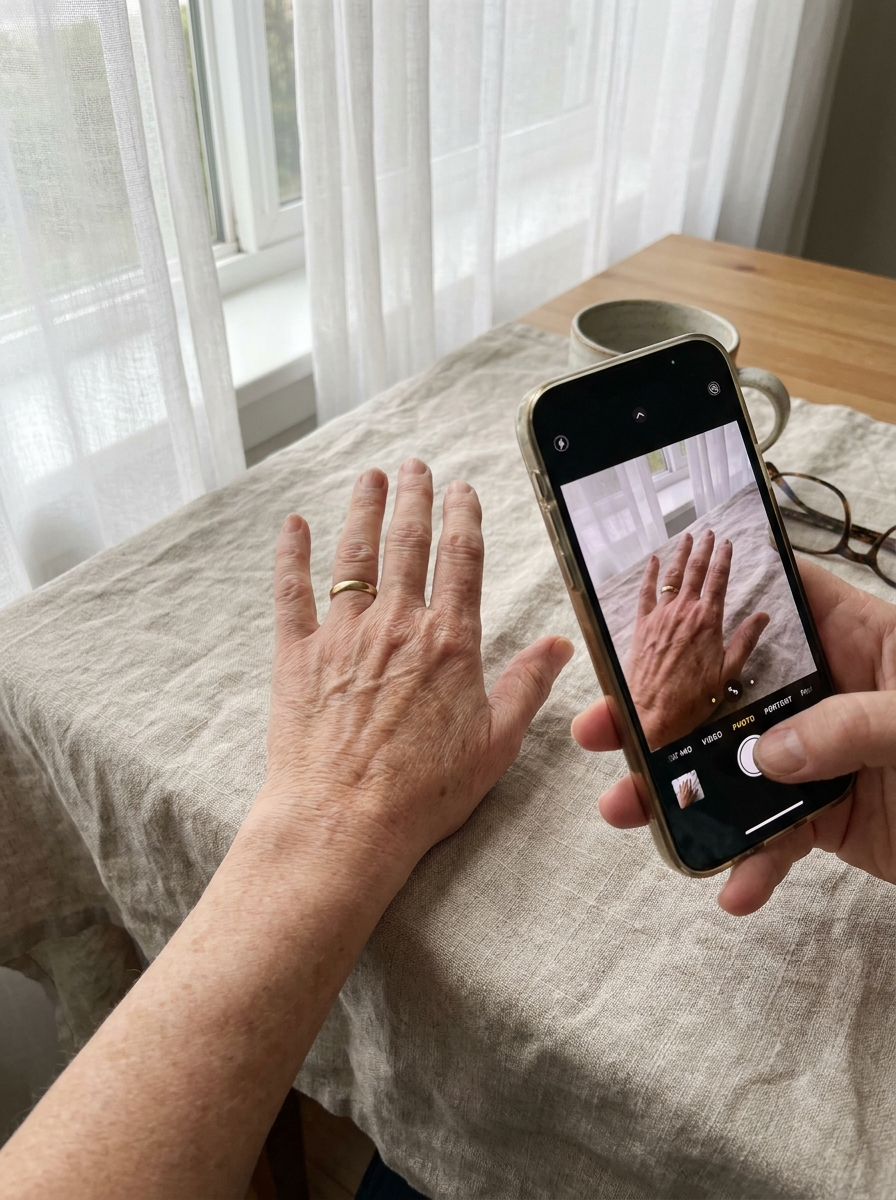
Your hands are the most public skin you own. They hand over the credit card. They wear the ring he gave you. They gesture, enormous, in the corner of every video call. There is no sleeve long enough, no pocket deep enough, to hide them all day — I know, because I spent a winter trying.
By week four, the morning tightness — that dry, papery pull when I first made a fist — was gone. By week six, the crinkled patch across my knuckles looked filled in. Not covered. Filled, from underneath, which is a different thing entirely, and once you've felt the difference you never forget it. Week eight, I photographed my hand wearing my thirtieth-anniversary ring and sent it to my sister without cropping, without angling, without thinking.
She wrote back: "Your hands look like you again." I sat in the car and read that four times. That's the real product, if I'm honest. Not smoother skin. Being visible again in the part of you the whole world sees up close.
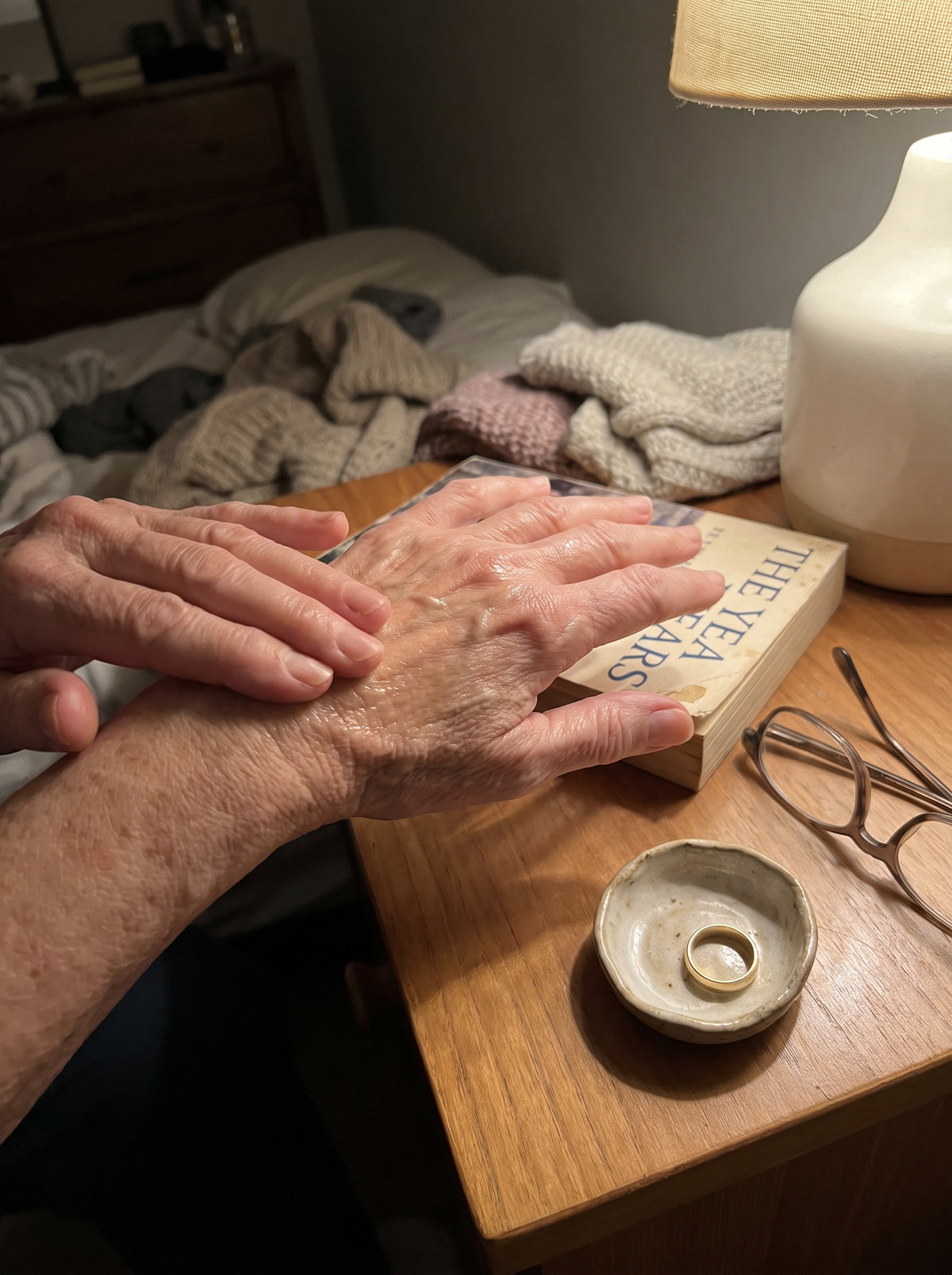
Add up my drawer: the creams, the gloves, the serums, the burn — over $1,400, and every dollar of it was my risk. If it didn't work, and none of it worked, that was my loss to swallow quietly.
The Eraé oil is $59. And it comes with the only terms I've ever been offered in this whole miserable category: sixty days, smoother or your money back. After everything I'd wasted, the arithmetic finally pointed the right way — if it failed, it was their loss, not mine. I ordered three bottles that night, the way you do when you've finally stopped hedging.
One honest warning: when I went back for my second round, it was out of stock for three weeks. That would be a shrug in any other category. It isn't here — because if you wait, nobody can promise your window is still open when it comes back.
The four-plant French oil Anne recommends for skin that changed in one season — built to sink into thin hand skin, wake it, and hold what it puts back.

Smoother in 60 days or your money back · Four plants, nothing pretending to be more · No retinol sting
The One Who Was Told It's Hereditary
My dermatologist said 'hereditary, don't worry about it.' But my mother's hands took thirty years to get like this. Mine took five months — that's not heredity, that's something happening. Eleven weeks in, I've stopped tucking my hands into my sleeves at work. Whatever my genes have planned for me at eighty, this wasn't that, and it wasn't hopeless.
Lorraine K., 57 — Columbus, OHVerified Buyer
The One Who Washes Her Hands for a Living
I'm a dental hygienist. I scrub in thirty-plus times a day, so every cream I ever bought was gone by 9 a.m. and I assumed an oil would be worse. It goes on at night, it sinks in instead of sitting there, and my hands still feel like mine at the end of a shift. Twelve weeks and the backs have filled back in. My patients see my hands before they see my face — that matters more than I ever admitted.
Renata S., 54 — Tampa, FLVerified Buyer
The One Who Thought She Was Too Late
I found this fifteen months after my hands changed, and I nearly didn't start — I'd read about the window and decided I'd already missed it. Anne would tell you the same thing she'd tell me: late is not the same as gone. The deepest creases over my knuckles are still there, just softer now. But the backs of my hands came back, and they came back real. Getting most of yourself back beats keeping none of it. Don't let the clock talk you out of trying.
Pam D., 62 — Santa Fe, NMVerified Buyer
It Took One Winter to Change Your Hands. Don't Give the Window a Second One.
Check Availability →This is an advertisement and not an actual news article.
THIS IS AN ADVERTISEMENT AND NOT AN ACTUAL NEWS ARTICLE, BLOG, OR CONSUMER PROTECTION UPDATE. Results vary from woman to woman and depend on how recently your skin changed and how consistently the ritual is used; nothing on this page is medical advice.