Free shipping on orders above $70
Cart (0)
Your cart is empty
July 8, 2026 · 7:30 am EST
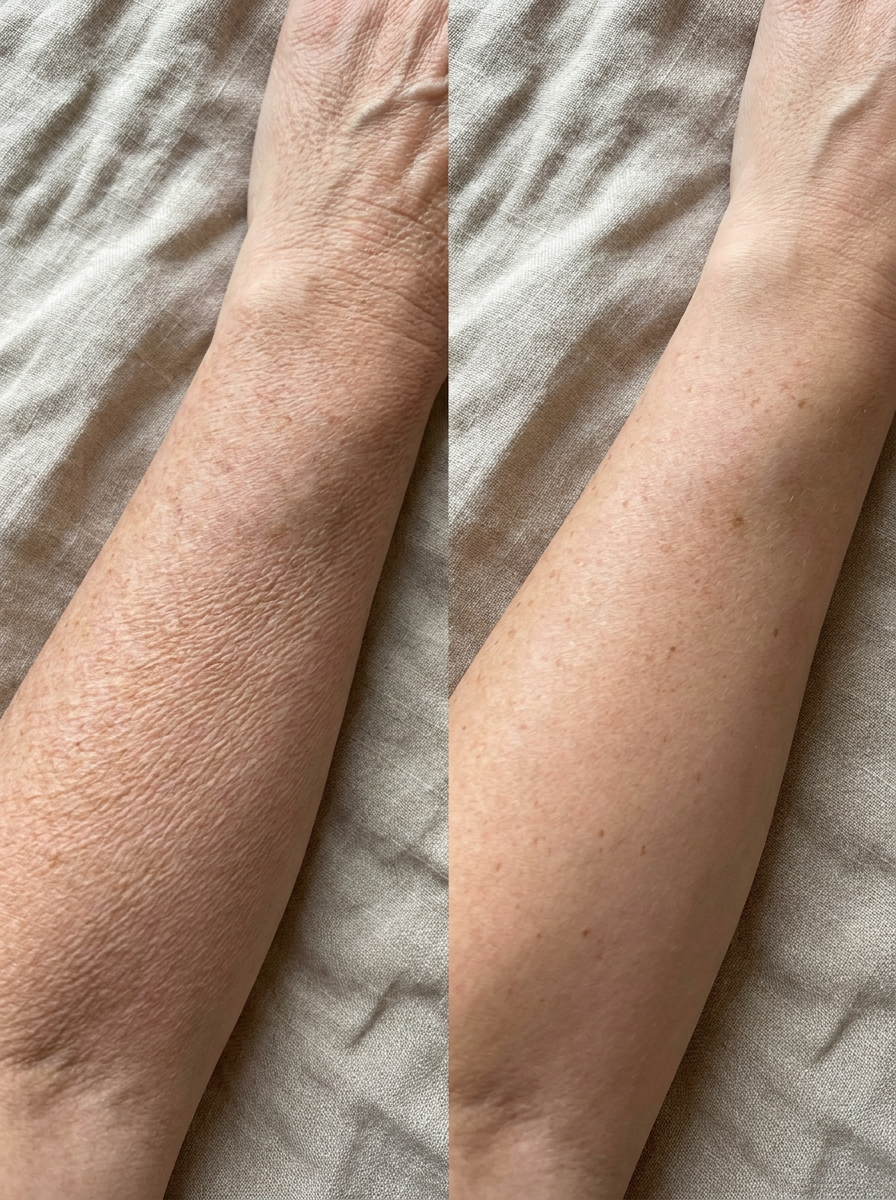
"American women are not lazy and they are not vain," Sylvie Rousseau tells me over a bad phone line from Grasse, where she has spent forty years putting botanical oils into bottles. "They are misinformed by the people they trust. And the misinformation costs them the only window they have."
If your arms looked like your arms last spring but suddenly don't. If you can name the summer it started — not a decade, a season. If a professional you paid looked at skin that changed in months and called it "just aging" — then Rousseau would like a word, because she has been on the other end of that mistake for four decades and she keeps the receipts.
I came to her because an American dermatologist recently went public about a conversation in Paris that undid thirty years of her training in twenty minutes. I wanted to speak to the other side of that world — the people who actually formulate what French women use. What Rousseau told me was more specific, and more urgent, than anything the confession covered.
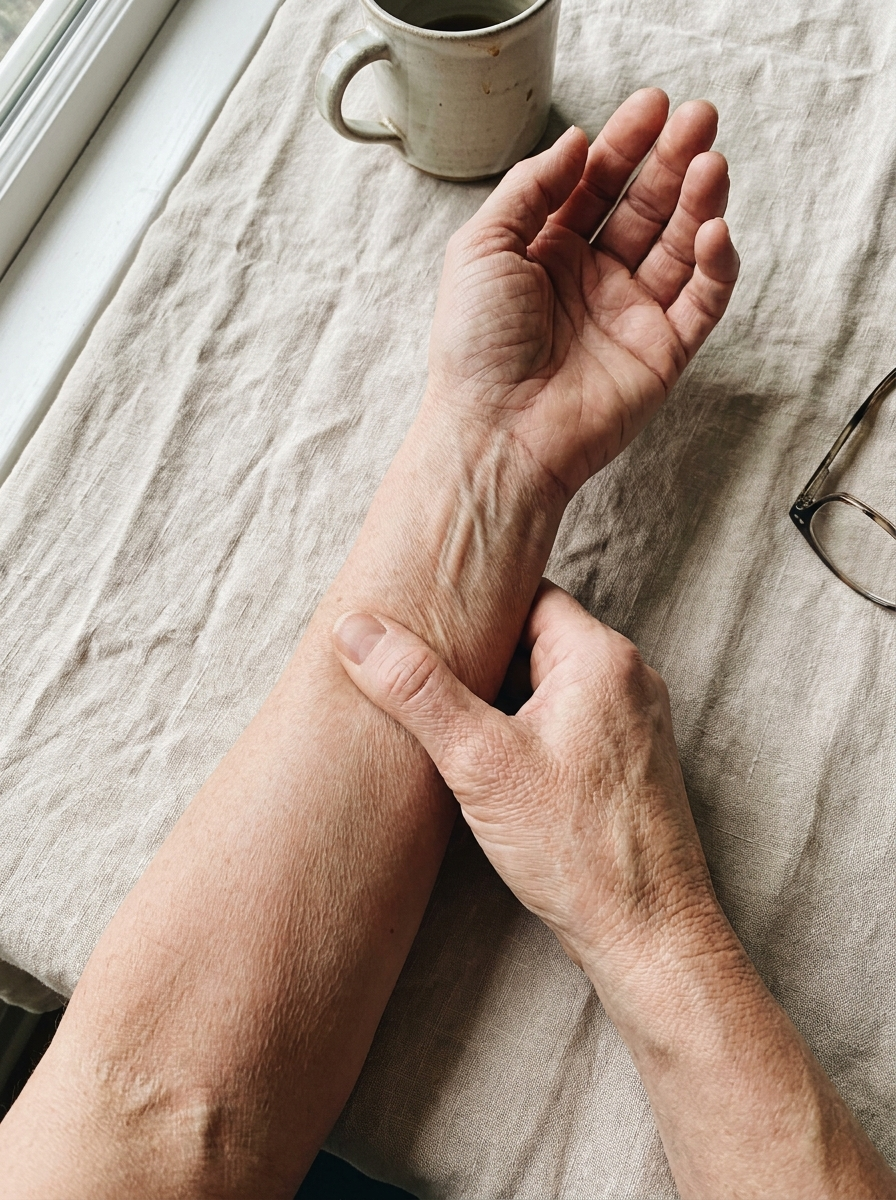
"Everyone in America is taught skin fades gradually — a little each year," Rousseau says. "That is true for a woman of thirty-eight. It is a lie for a woman two years past menopause." Ordinary aging costs roughly one percent of collagen a year. The hormonal shift can strip two or three years' worth in a matter of months.
That is why women can point to a season. "When a woman tells me 'it happened over one summer,' I believe her instantly," Rousseau says. "She is describing the mechanism correctly. The professional who says 'you just finally noticed' is the one who is wrong."
The skin that dropped was not sagging quietly for a decade. It fell. Suddenly. That single correction changes everything about what you should do next.
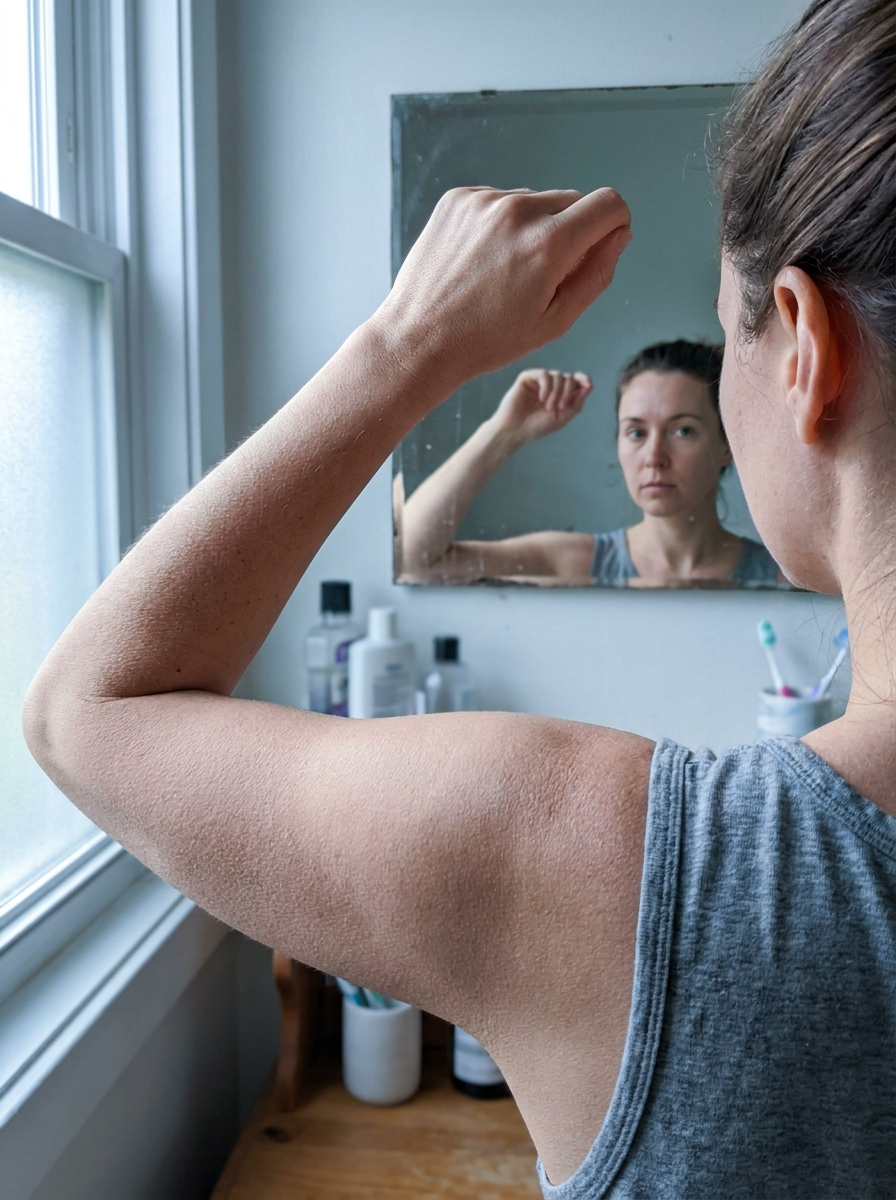
Here is the part Rousseau raises her voice about. "Dormant is not dead. For roughly eighteen to twenty-four months after the collapse begins, the fibroblasts — the cells that build the structure — are asleep, not gone. You can wake them."
Miss that window, and the vocabulary changes. "After it closes we are no longer talking about recovery. We are talking about management. Two different worlds."
The cruelty, she says, is that most women spend the entire window rubbing on the wrong things and never learn it existed. "They think they have all the time in the world. They have eighteen months."
"I have seen every American solution arrive, sell, and disappoint," she says, and she went through them one by one.
Firming creams: "Water and thickener. They sit on top. They tighten the surface for an hour so you feel something — then nothing." Retinol on the body: "Irritation and sun sensitivity on skin that is already fragile. You inflame what you meant to repair." In-office energy devices: "They heat existing collagen to shrink it. There is little left to shrink after a collapse." Any oil at all: "This is the one that enrages me. Yes, mature skin needs oil. But grease with no active ingredients does nothing. Women use it a year and swear it 'did nothing' — they are correct."
"The category is right," Rousseau says. "The specific thing inside almost every bottle is wrong."
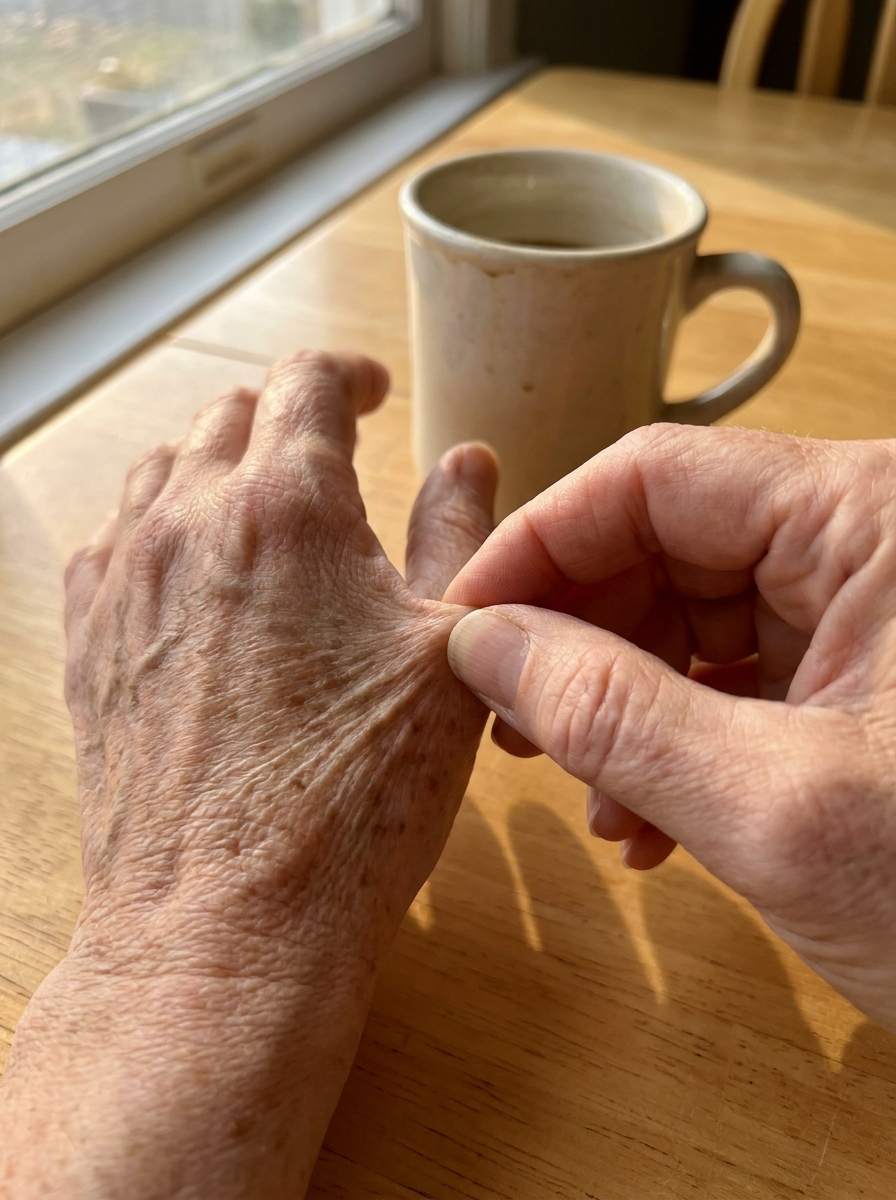
This is Rousseau's central argument, and it is why the shelf failed the women who tried hardest. "Almost every American product is built for gradual aging — slow it, delay it, maintain. That is the wrong tool for a collapse. A collapse is not a slow leak you seal. It is a structure that dropped, and you must rebuild it."
Rebuilding requires three things done in order, she says, and no cream does any of them. First, wake the dormant cells. Second, restore the barrier the skin no longer makes for itself. Third, physically replace the lipids the hormonal shift stripped out.
"Maintenance assumes you still have a structure to maintain," she says. "After menopause, for many women, you do not. You have to put it back."
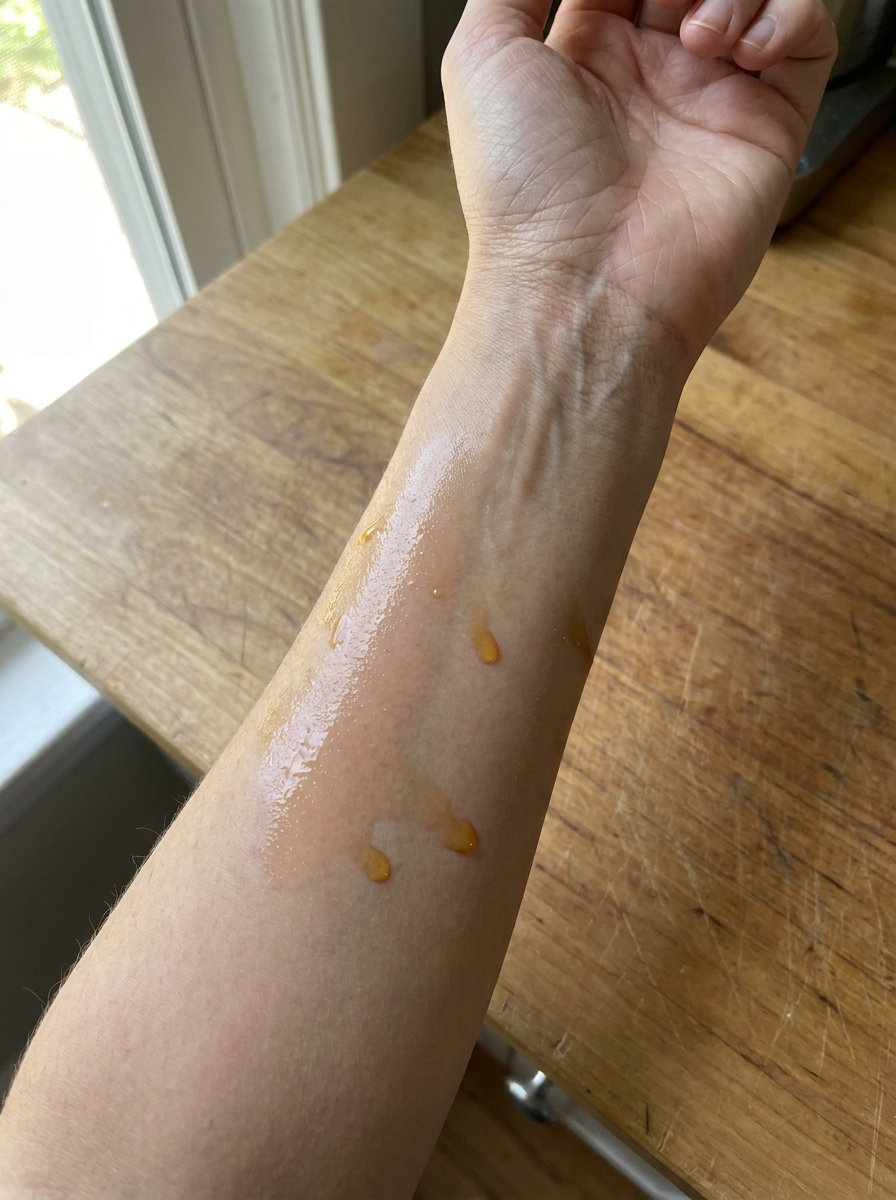
Rousseau formulates, so she talks in ingredients, not marketing. "There are four that matter for this. Everything else in a bottle is a delivery vehicle."
To wake the skin (Phase I, Éveil): Bakuchiol. "It restarts the cell turnover the way retinol does — but without the irritation or the sun sensitivity. On fragile body skin, that distinction is everything." To shield it (Phase II, Protection): Camellia Japonica seed oil. "It mimics the skin's own sebum. The skin recognizes it and lets it in — it does not sit on top like grease." To rebuild it (Phase III, Reconstruction): Sea Buckthorn fruit oil, for its Omega-7 and carotenoids, and Evening Primrose oil, for its GLA. "These two physically replace the lipids menopause removes. This is the actual putting-back."
"One wakes. One shields. Two rebuild," she says. "If a bottle does not carry all four, you are not buying a treatment. You are buying oil."

I asked her which formulation actually carries all four. She was blunt. "I do not endorse American brands chasing an anti-aging trend. Those are built to sell the word. There is a French house — Eraé Paris — built the other way around. It started from one question: what does mature skin lose after menopause, and how do you give it back."
Their Queen Oil, she says, is built on exactly those four heroes and nothing invented for the label. "That is why I can speak about it and keep my reputation. It is not a moisturizer that borrowed a story. The story is the formula."
What convinced me was not her endorsement — formulators recommend things all the time. It was that she recommends almost nothing. "Forty years," she said. "I can count on one hand the products I would put on my own arms."
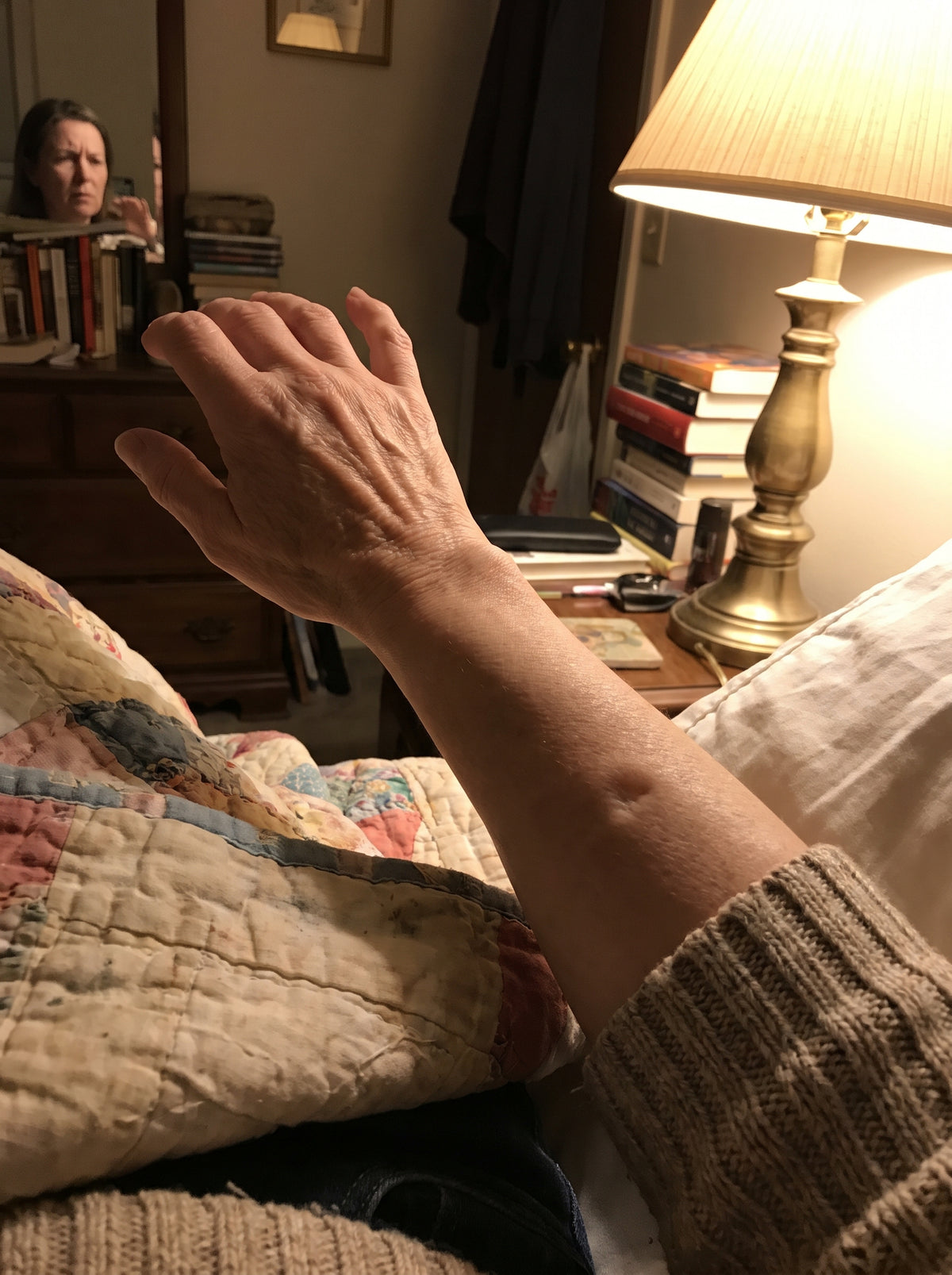
Rousseau understands the real hesitation. It is not the fifty-nine dollars. It is the dread of another jar that "did nothing" — the year already wasted on grease.
"That is why the sixty-day return matters more here than for a face cream," she says. "No forms. No questions. You have used enough products that promised and cost you time. If this is another one, you send it back and you have lost nothing but two weeks."
And the fear underneath that one — that you may already be too late. "If you are near the edge of your window, do not let the fear of being late talk you out of finding out. Partial recovery inside a closing window is still recovery. Permanent is the only outcome I would not wish on anyone."
The four plant-and-sea heroes that wake, shield, and rebuild what menopause strips out. One step, morning and night.
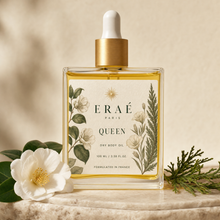
60-day money-back guarantee · no forms, no questions
"I was sure it was another expensive oil"
I have a shelf of oils that did nothing. A year on one of them and my arms only got worse. This is the first one that isn't just grease sitting on top — my skin drinks it and by morning it isn't tight-then-empty, it's actually different. I can name the four things in it now, which is more than I could say for anything else I bought.
Karen M., 57Verified Buyer
"My dermatologist told me it was just aging"
My arms changed between one June and September and my doctor said that's just what happens in your fifties. It never sat right — it was too fast. Reading that it's a collapse, not a slow fade, was the first thing that matched what I actually saw in the mirror. I started the oil the week I read it. Ten weeks and the pinch on my arm springs back now instead of sitting there.
Donna R., 54Verified Buyer
"I thought I'd missed my chance completely"
Mine started almost sixteen months before I found this, so I nearly didn't order — I figured the window was gone and why bother. I'm glad I didn't listen to that. My arms aren't twenty again and I won't pretend they are. But they're noticeably better than they were, and better is not nothing. Even partial recovery is better than permanent damage. I only wish I'd started at month four.
Lorraine T., 61Verified Buyer
You can name the season it started. That means the window is still open — but it does not stay open on your schedule, and once it closes recovery becomes management.
Check Availability →This is an advertisement and not an actual news article.
THIS IS AN ADVERTISEMENT AND NOT AN ACTUAL NEWS ARTICLE, BLOG, OR CONSUMER PROTECTION UPDATE. Individual results vary and are not guaranteed; the experiences described reflect individual women and may not be typical.