Free shipping on orders above $70
Cart (0)
Your cart is empty
July 31, 2026 · 9:00 am EST
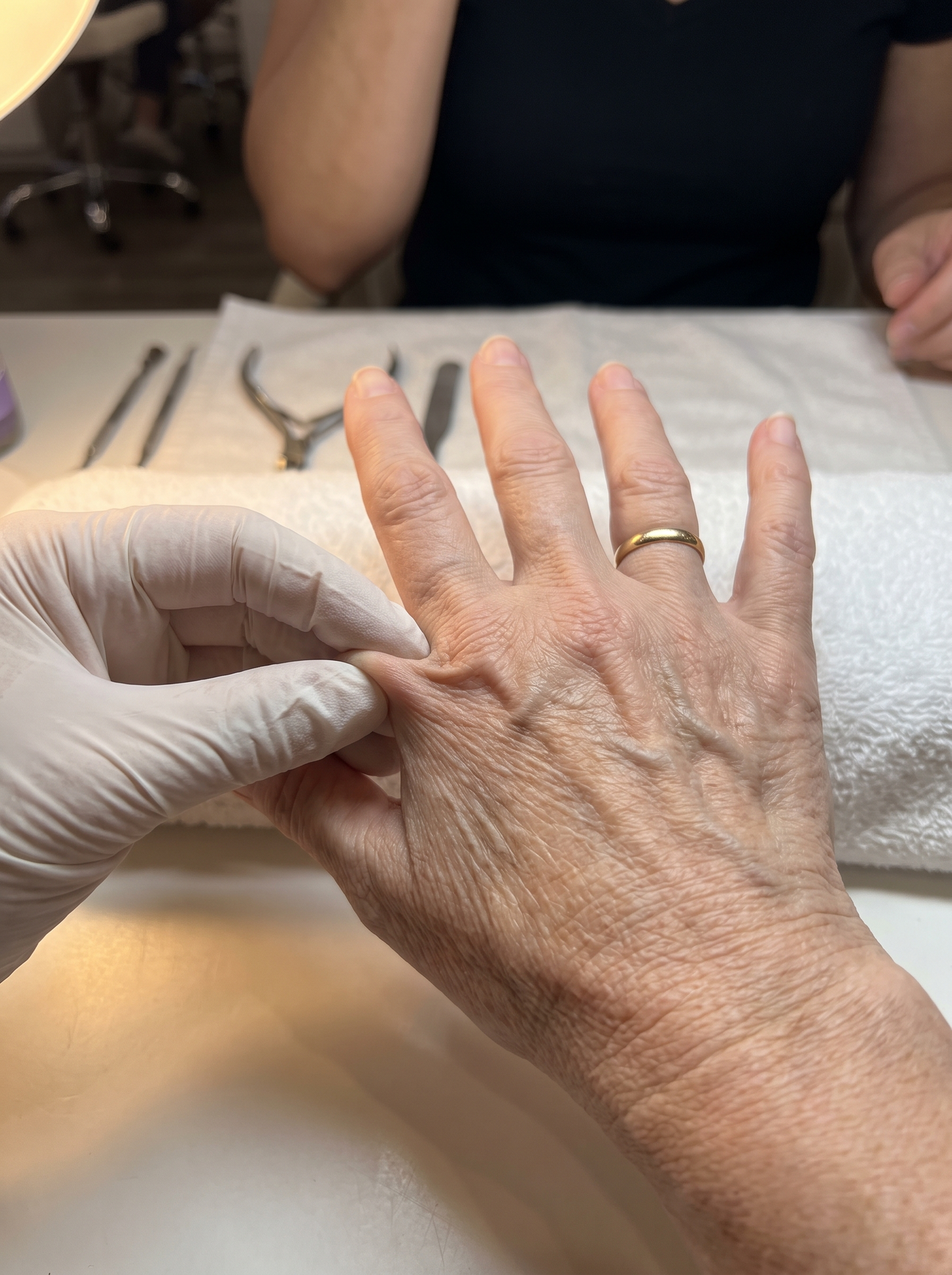
I hold roughly thirty pairs of hands a week, under the same lamp, six weeks apart. I have for twenty-four years. When the backs of a woman's hands change, I don't find out from a photograph — I find out before she does. And in the last few years I've watched something happen that nobody in my chair has a name for: hands that were fine at one appointment and crepey at the next.
If the backs of your hands went crepey almost overnight — if you can name the season it happened — keep reading. If you've started tucking your hands under the table, retaking your ring photos, wincing when you catch them on a keyboard. If someone you trusted glanced at them and said "that's just aging," and every instinct you have says that can't be the whole story.
Then I'd like to tell you what I've learned across my manicure table — and what one longtime client finally explained to me about why it happens, why the creams never touched it, and why the timing matters more than anything else.
Because hands like yours didn't age. Something underneath them collapsed — suddenly — and once you understand the difference, everything about what to do next changes.
Slow aging I've seen plenty of. It creeps. You'd need years of appointments side by side to notice it.
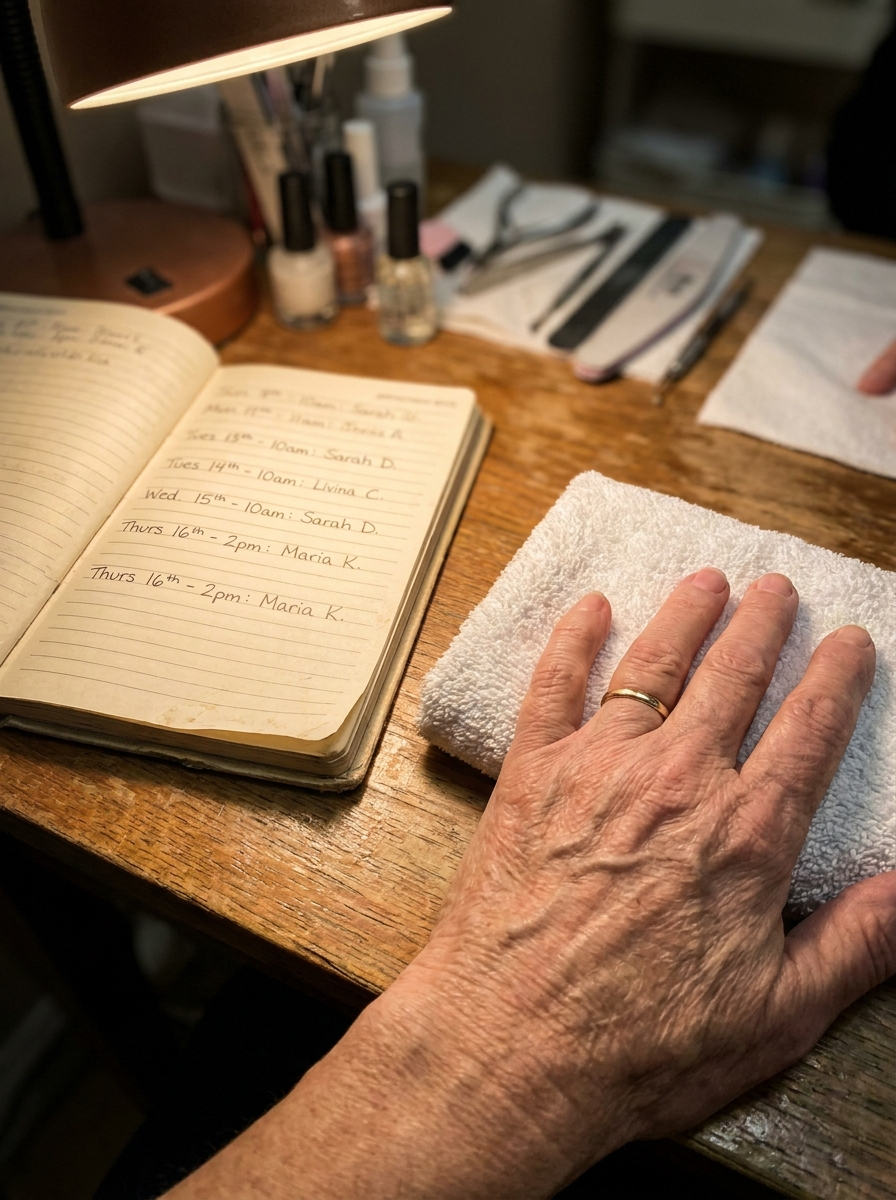
This is not that. This arrives between a July appointment and a September one. A client whose hands I've held for a decade sits down, I take her hand under the lamp, and the back of it has gone crepey — crinkled, papery, creased — since the last time I touched it. Six weeks. I can point to the pages in my appointment book.
The women feel crazy saying it out loud. "I woke up with my mother's hands." "It happened overnight." "They're lying about my age." They half-apologize for the drama of it, because everyone around them insists aging is gradual and they must simply have stopped paying attention.
They didn't stop paying attention. I was paying attention for them, professionally, every six weeks. It happened exactly the way they say it happened. Fast.

Arms get cardigans. Necks get scarves. Legs get long hems and a story about running cold. Every other part of a woman has a hiding place, and I've watched clients build entire wardrobes out of them.
Hands have nowhere to go. They're out in every handshake, every passed plate, every wave across a parking lot, every photo where someone says "show us the ring." One client told me she'd retaken her engagement photo eleven times and finally cropped her own hand out of it. Another started paying at the register with her hand turned sideways, like a card trick.
That's the part that isn't vanity, and I wish more people understood it. Hands are how people take yours. When you start withdrawing them — sitting on them, folding them, gloving them in October — you're not hiding skin. You're withdrawing from the room, one small refusal at a time.
You can manage your angles everywhere else. Not there. Which is exactly why the backs of the hands deserved a real answer, and never got one.
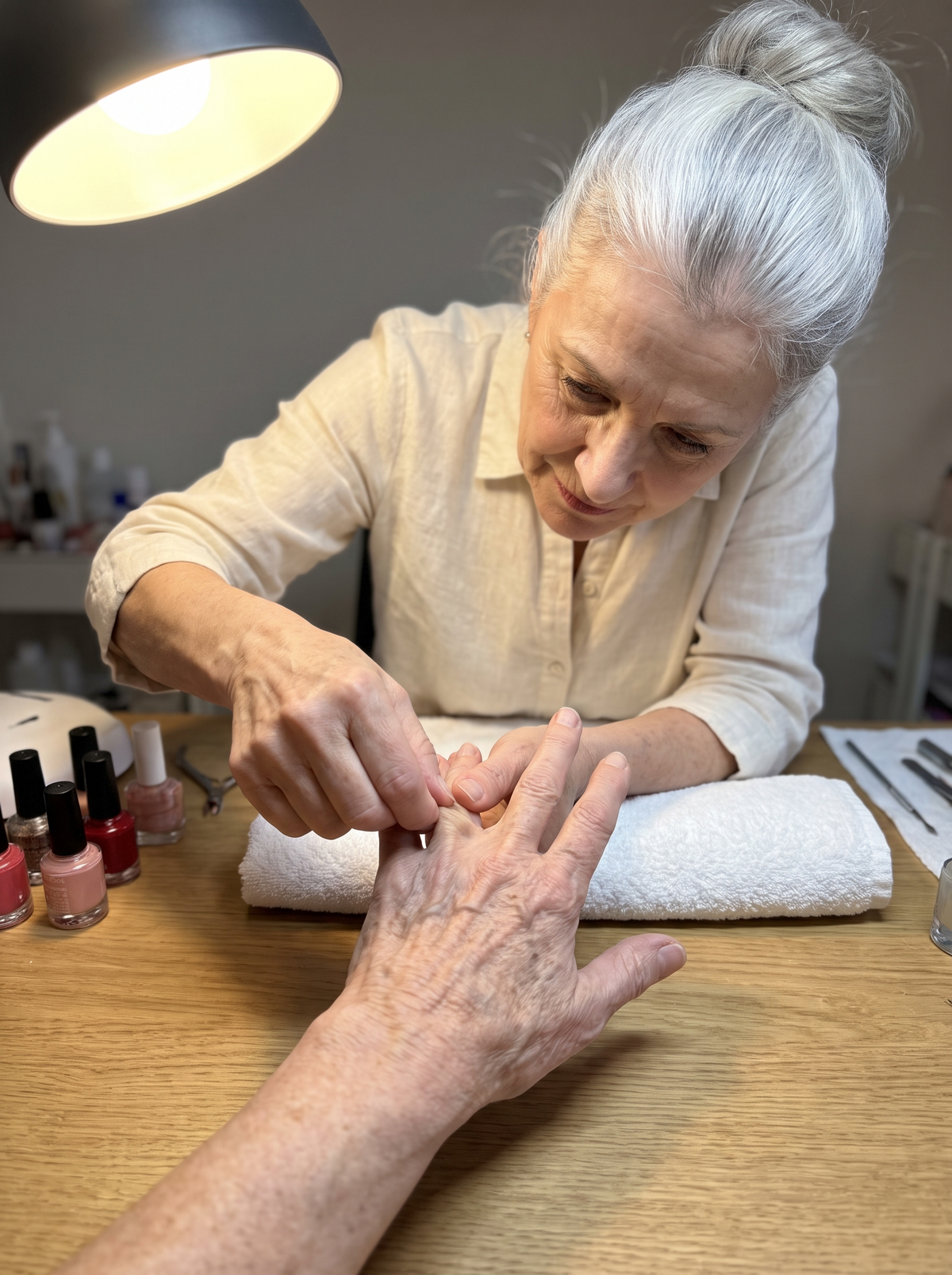
Anne has been my two o'clock on Thursdays for six years — an esthetician who spent her whole career in Paris and retired here. Last spring I asked her, while I worked on her cuticles, why I was suddenly seeing so many hands change so fast.
She didn't answer. She turned my own hand over, pinched a small fold of skin on the back of it, and we both watched the crease hold for a moment before it sank flat. "There's a cushion under this skin," she said. "Padding that keeps the surface full. The cells that keep it topped up take their orders from your hormones. When the change pulls those hormones out, the cells go quiet — and the cushion collapses. Not slowly. A few years of it in one season. That's why your clients can name the summer it happened. It happened that summer."
Then she told me why hands go first. The back of the hand is the thinnest skin a woman owns, stretched over bone and tendon with no muscle beneath it — nothing to train, nothing to firm, nothing holding the surface up but that cushion. "When the cushion goes," she said, "the hand shows it before anywhere else. And it's the one place she can't cover."
I've held thousands of hands. That was the first time anyone explained them to me.
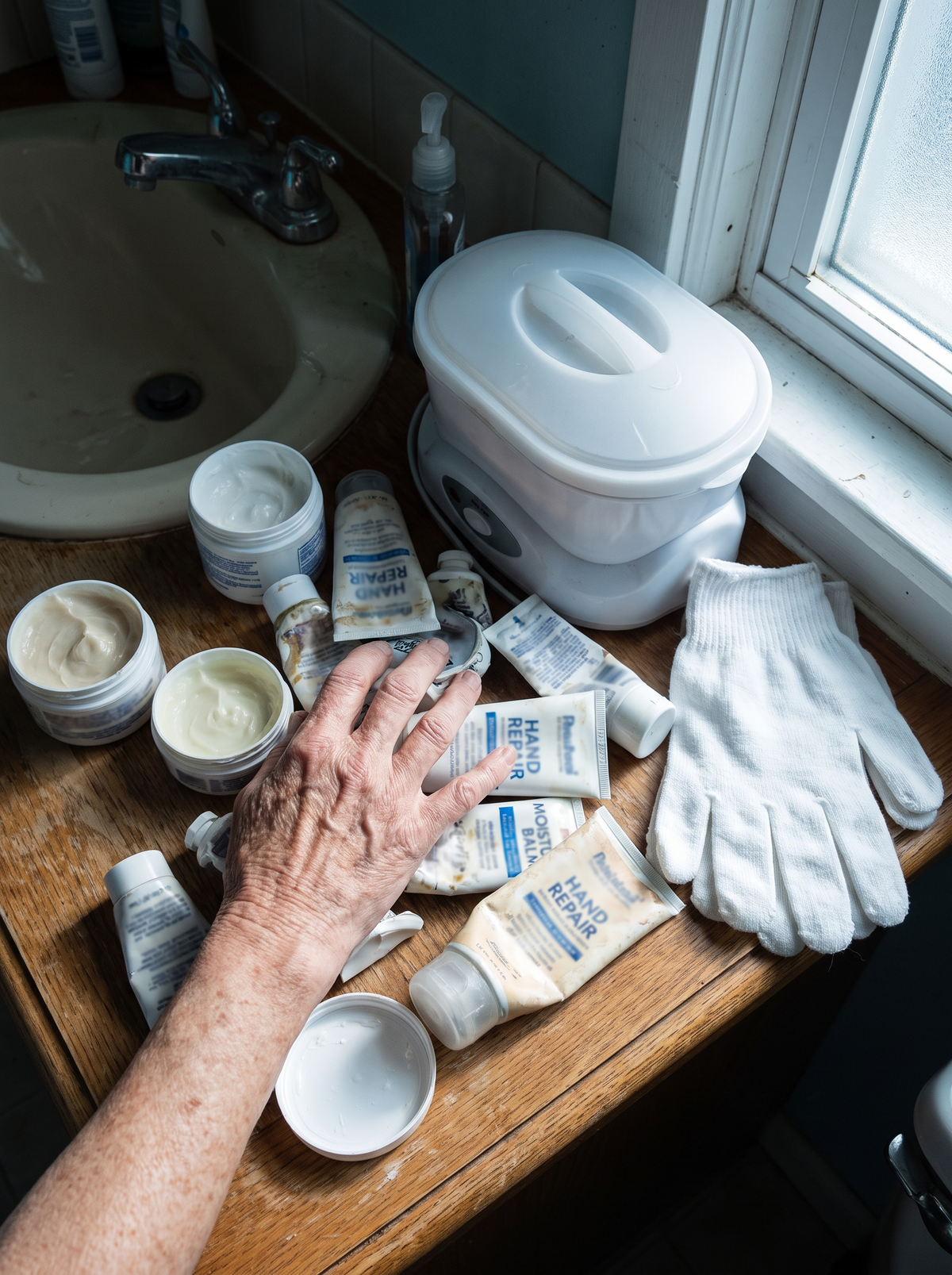
Once you know the problem is a collapsed cushion underneath, the whole drawer of failed products explains itself.
Hand cream softens the surface. The surface was never the problem — and a cream is too heavy to get through skin that thin, so it sits on top and dies there. Paraffin dips feel wonderful and are gone by Tuesday. Cotton gloves and SPF protect what's left; they rebuild nothing. The med-spa two doors down from my salon quotes north of $1,200 a syringe for hand filler — rented fullness, rebooked by spring, forever.
And the doctors? Anne was gentle about this. They're trained on the slow kind of aging, the one-percent-a-year kind. They see crepey hands on a 47-year-old and file it under inevitable, because nobody taught them there's a sudden kind with a different cause and a different clock.
So hear this plainly: you weren't careless, and you weren't foolish. You were handed tools built for slow aging and aimed at a collapse. They were never going to work — not because of you.
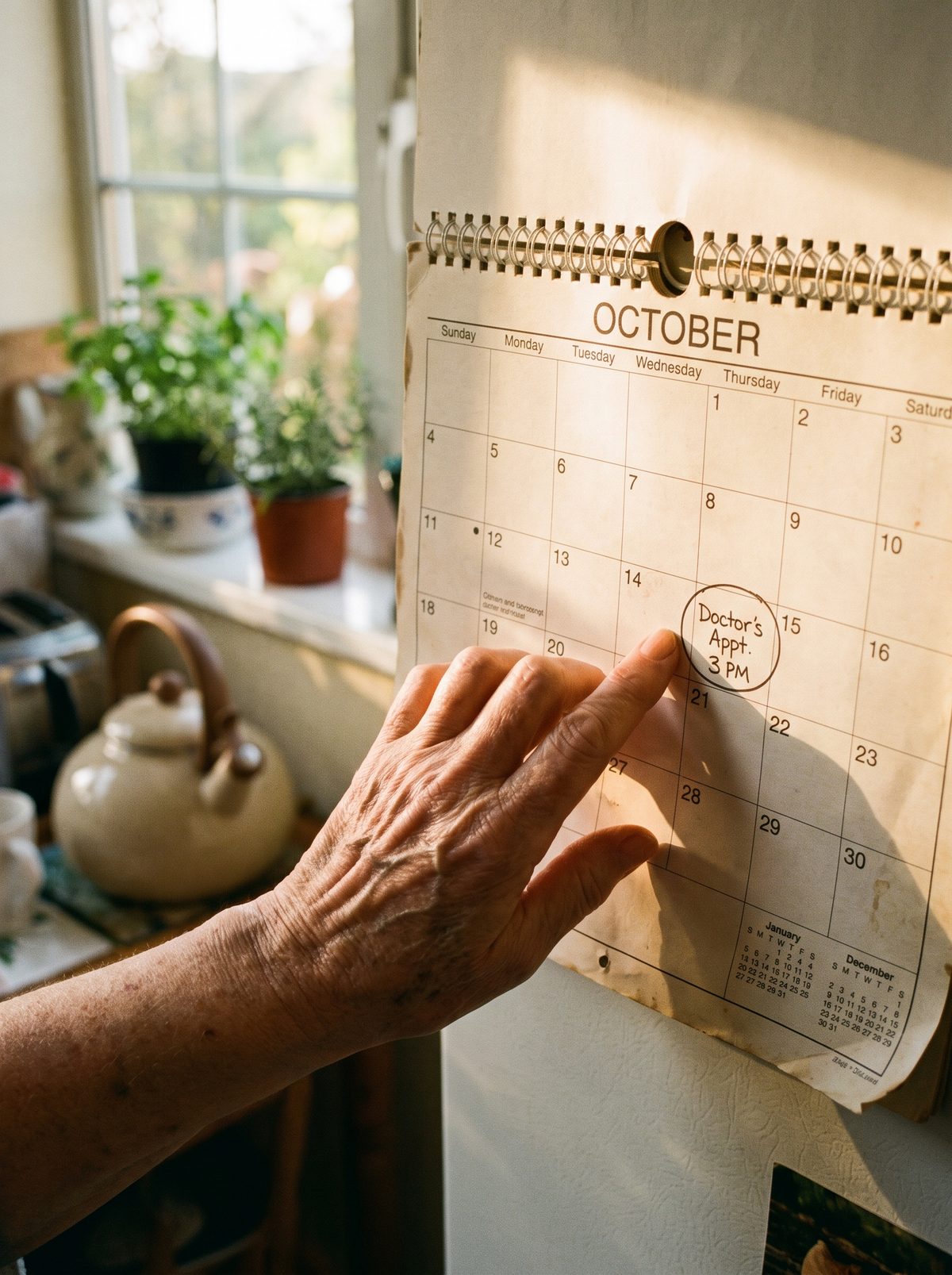
Here is the part Anne told me that made me stop filing this under cosmetics and start taking notes.
Those quiet cells under the skin aren't dead. They're asleep. But left asleep too long, they set — and once they set, nothing rebuilds the cushion. Not creams, not machines, not anything sold in my industry or hers. She put the window at roughly eighteen to twenty-four months from the moment it starts.
Which means every month spent on good moisturizer and polite reassurance isn't neutral. It costs something. Not dramatically — quietly. The waiting takes the one thing the creams can't give back.
If you can name the season your hands changed — and almost every woman I ask can, to the month — then you can count. That isn't meant to frighten you. It's arithmetic, and it's the most useful arithmetic anyone will ever hand you about this.
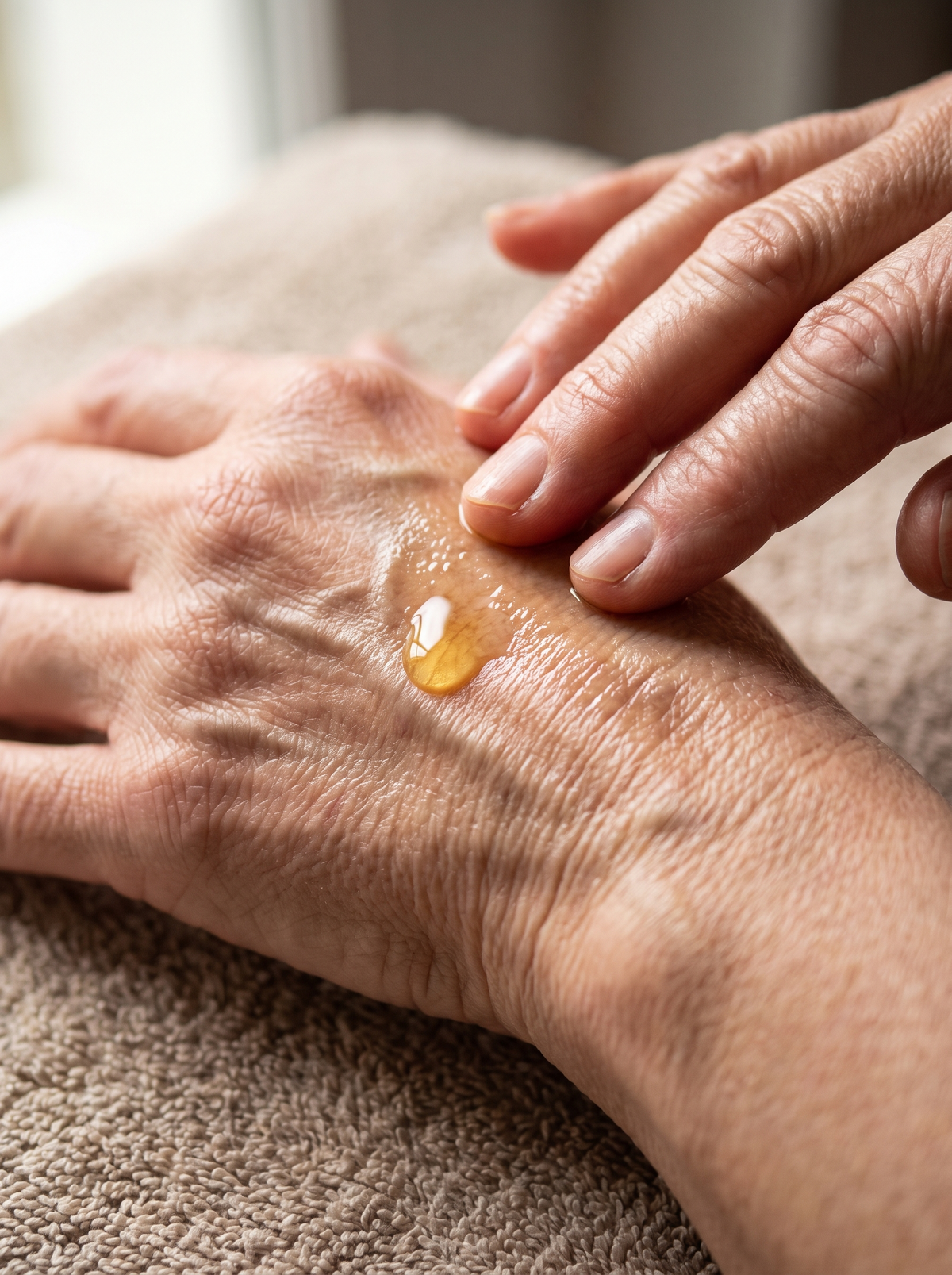
The first was Evelyn, a retired teacher whose hands had changed the autumn before — I'd watched it happen, and watched her start booking dark polish to distract from the backs of them. She came in one spring afternoon, I took her hand, and the fold on the back of it sprang flat under my thumb. I asked her straight out what she'd done.
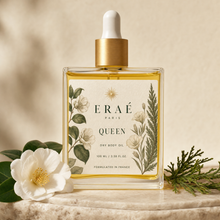
A French botanical oil, she said — Eraé Queen Oil — made by a house that built it for the collapse instead of the slow decline. And the logic, when she walked me through it, matched what Anne had taught me at that same table, point for point. An oil light enough to actually sink into the thinnest skin you own, instead of sitting on top the way every cream had. Bakuchiol — the plant that does the waking work of the prescription creams without burning skin that's already thin — to rouse the sleeping cells. And sea buckthorn, camellia and evening primrose to put back the exact richness the change strips out, so the cushion has something to rebuild with.
Get in. Wake. Feed. All three, every time — because every product in my clients' drawers had died at the first step, and the other two never got their turn.
I ordered a bottle for my own hands before her top coat dried.
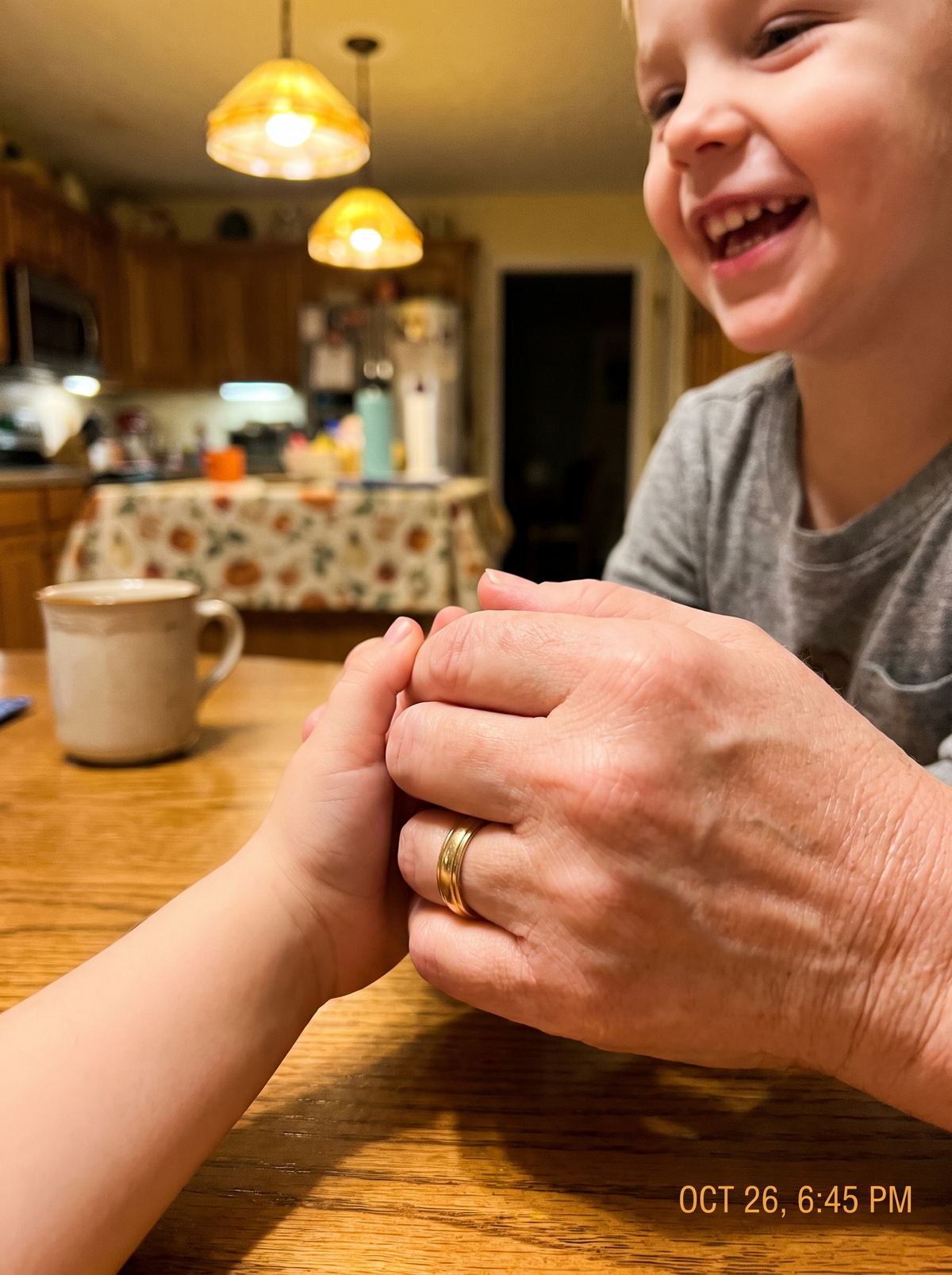
I keep a quiet list now, pencilled in the back of my appointment book — every client I've passed the name to since Evelyn. Nineteen names in about a year. Fourteen of those women have come back with hands that pinch differently under my thumb: the fold springs flat instead of holding. I check now, every manicure, without announcing it. It's become the most honest measurement in my salon.
My own hands took about six weeks. I know because that's when I stopped cropping them out of the photos I post of my nail work — which, for a manicurist, is a strange thing to have been doing in the first place.
I know what the hesitation is, because I've heard it in my chair: the drawer already full of things that didn't work, and the quiet fear that your window may already be spent. That's precisely what the sixty-day promise is for. If it does nothing — or if you're past the point where it can — you send it back for a full refund and you're out nothing but the trying.
Set that against filler by the syringe, twice a year, forever. It's a different kind of arithmetic. And unlike the syringe, this one is aimed at the thing that actually went wrong.
One oil, three jobs: sink into the thinnest skin you own, wake what's gone quiet underneath, and feed the cushion back. Start while you're still inside your window.
60-day money-back guarantee · Full refund if it doesn't work for you · No retinol burn, no photosensitivity
"I Had a Drawer Full of Proof It Wouldn't Work"
I ordered it fully planning to send it back — I'd been burned by every 'firming' promise on a shelf. Around week three I pinched the back of my hand at a red light, the way the article said, and the fold sprang flat. I sat there through the green light with my eyes stinging. They look like MY hands again. Not my mother's. Mine.
— Gail R., 54, OhioVerified Buyer
"My Hands Are in Water Forty Times a Shift"
I'm a dental hygienist — constant washing, gloves, then typing charts all evening. I assumed an oil would either wash straight off or end up all over my keyboard. It sinks in inside a minute and there's nothing on the keys. Eight weeks in, the backs of my hands have filled in enough that a patient asked about my ring — and I let her look.
— Marta L., 49, PortlandVerified Buyer
"I Counted Twenty Months and Ordered Anyway"
By the time I found this, I was almost two years past the summer my hands changed, and I nearly talked myself out of it — too late, why bother. The deepest creases on my knuckles are still there. But the backs of my hands have filled in enough that I wear my rings again and I've stopped pulling my sleeves down over them at church. Partial turned out to be worth everything. Don't let the counting talk you out of trying.
— Lorraine B., 63, GeorgiaVerified Buyer
The Window Doesn't Announce Itself When It Closes. If You Can Name the Season Your Hands Changed, Your Clock Is Already Running.
Check Availability →This is an advertisement and not an actual news article.
THIS IS AN ADVERTISEMENT AND NOT AN ACTUAL NEWS ARTICLE, BLOG, OR CONSUMER PROTECTION UPDATE. Individual results vary; Eraé Queen Oil is a cosmetic product and is not intended to diagnose, treat, cure, or prevent any disease.